Sublustrum Rating and Review: Evaluating the Cult Classic Adventure Game
Discover the definitive Sublustrum rating and comprehensive review. Explore its surreal world, sound-first design, puzzles, and upcoming 3D reimagining.
When exploring psychological horror and surreal puzzle adventures, gamers frequently look up the Sublustrum rating to gauge whether this atmospheric masterpiece matches their taste. Understanding the overall Sublustrum rating helps both veterans and newcomers decide if they are ready to dive into its cryptic, memory-warping depths as we approach its modern reimagining.
Originally released in 2008 by Phantomery Interactive (and known as Outcry in Western regions), this cult classic earned critical acclaim—including prestigious KRI Awards for Best Adventure Game and Best Sound Design. With Brickworks Games and publisher HypeTrain Digital preparing a full 3D remake scheduled for release on Steam, interest in its historical standing and overall Sublustrum rating has surged once again.
The Origins and Sound-First Design of Sublustrum
To truly understand any critical Sublustrum rating, you must examine its unique genesis. The project began not as a traditional point-and-click adventure, but as an interactive visual music album crafted by the dark ambient project Anthesteria (noted for co-composing the Metro 2033 soundtrack). This audio-first approach fundamentally alters how players interact with the environment.
Instead of treating background music as mere window dressing, the developers made sound a core gameplay mechanic. Players must tune frequencies, eavesdrop on ghostly echoes through static, and navigate an entire zone built as a massive, playable musical instrument.
| Design Element | Implementation | Impact on Experience |
|---|---|---|
| Audio Design | Dark ambient tracks & frequency tuning | Drives puzzle mechanics and establishes a heavy, oppressive atmosphere. |
| Visual Style | Vintage camera lenses and aged film grain | Evokes early auteur cinema and fragile, fragmented dreams. |
| Inspiration | Jungian psychology and Kafkaesque fiction | Functions like a psychoanalysis session exploring grief and acceptance. |
Surreal Environments and the Aesthetic Appeal
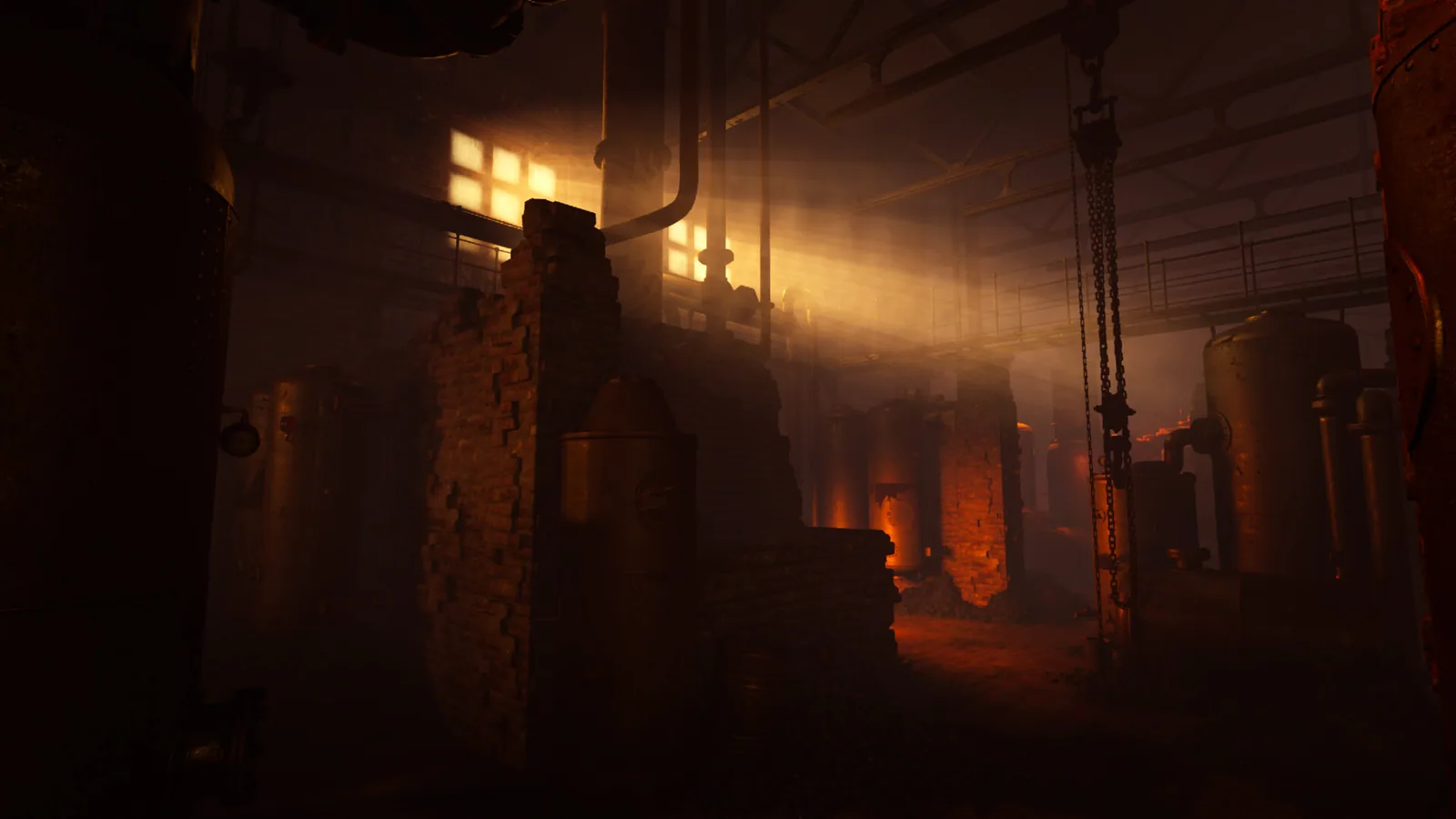
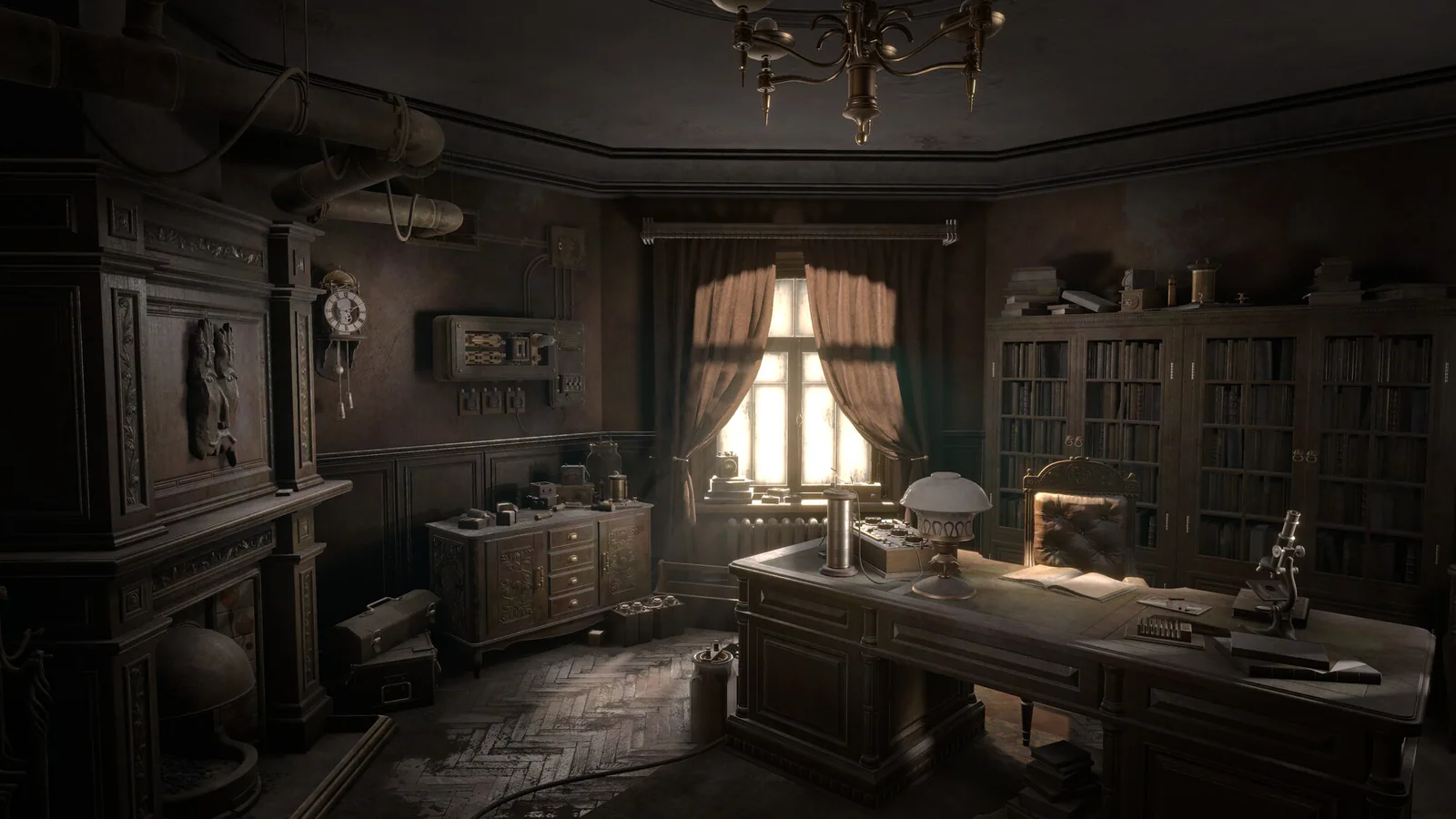
Visually, the game presents a distinct grimy realism blended with industrial decay. Player feedback highlights how effectively the pre-rendered graphics—steeped in sepia tones, dynamic exposure, and film-grade post-processing—convey a sense of decrepit antiquity.
You begin in what feels like an ancient apartment complex, complete with peeling two-color wallpapers, exposed industrial pipes, and mysterious contraptions left behind by a vanished brother. Stepping into the alternate dimension known as the "Flickering World" pushes surrealism even further into liminal spaces, floating architectural fragments, and decaying Soviet-style ruins.
| Environment Phase | Visual Characteristics | Dominant Mood |
|---|---|---|
| The Scientist's Apartment | Decaying Soviet architecture, exposed pipes, vintage notes | Grounded, claustrophobic industrial dread |
| The Flickering World | Distorted gravity, floating islands, dreamlike ruins | Surreal, disorienting, and melancholic |
| The Final Chapter | Sparse winter landscapes, audio-driven corridors | Cold, final, and deeply reflective |
Narrative Depth and Psychological Themes
The plot kicks off with an eerie letter from a scientist brother inviting you to witness an impossible breakthrough. Upon arrival, you discover he has vanished, leaving behind a device designed to immerse human consciousness into the subconscious mind.
Community reports and narrative critiques note that the story relies heavily on scattered notes, phonograph records, and ambient storytelling. While brief—most playthroughs clock in under two hours if you know what you are doing—the narrative tackles heavy themes like grief, the linearity of time, and the psychological impossibility of reversing past tragedies.
Key Narrative Pillars
- The Missing Brother: Piecing together journals that document a descent into madness.
- Non-Linear Realities: Investigating historical anomalies and mysterious disappearances.
- Acceptance of Loss: Confronting childhood memories and learning to let go.
Puzzle Complexity and Community Feedback
When evaluating the gameplay mechanics behind any positive Sublustrum rating, players often express mixed feelings regarding the puzzles. Traditional point-and-click logic is stretched to its limits here, requiring lateral thinking, trial and error, and meticulous observation.
Community feedback emphasizes several key pain points and triumphs regarding the puzzle design:
- Sound-Dependent Solutions: Because audio drives the progression, hearing-impaired players will find major roadblocks during frequency and pitch-matching puzzles.
- Obscure Object Placement: Certain interactive hotspots blend seamlessly into grimy textures, leading to frustrating pixel hunts.
- Pacing Interruptions: Going back and forth across environments to test random switches can occasionally break the atmospheric immersion.
| Puzzle Type | Difficulty Level | Player Reception |
|---|---|---|
| Environmental Switches | Moderate to High | Can feel tedious due to back-and-forth traversal. |
| Sound and Pitch Tuning | High | Rewarding for audiophiles, but impassable for the tone-deaf. |
| Time-Reversal Sequences | Moderate | Tense, though strict timing can frustrate casual players. |
System Requirements for the Upcoming 3D Remake
With the upcoming reimagining built from the ground up in fully explorable 3D, modern PC hardware specifications have been released for players wishing to step back into the Flickering World.
| Specification Tier | Minimum Requirements | Recommended Requirements |
|---|---|---|
| Operating System | Windows 10 64-bit | Windows 11 64-bit |
| Processor | Intel Core i5-7400 / AMD Ryzen 5 1600 | Intel Core i5-9600K / AMD Ryzen 5 3600 |
| Memory (RAM) | 8 GB RAM | 12 GB RAM |
| Graphics Card | GTX 1060 (3GB) / RX 580 (4GB) | RTX 2060 Super / RX 5700 |
| Storage Space | 10 GB available SSD space | 15 GB available SSD space |
Frequently Asked Questions
What is the general Sublustrum rating among adventure game fans?
The game generally holds a favorable cult status among fans of dark, surreal indie titles. While praised for its peerless dark ambient soundtrack and striking art direction, its obscure puzzles and brief runtime keep its overall score grounded as a niche masterpiece rather than a mainstream hit.
Is Sublustrum scary?
It leans heavily into psychological horror, atmospheric dread, and unsettling surrealism rather than traditional jump scares or monster chases, making it ideal for fans of Kafkaesque and Jungian themes.
Do I need to play the 2008 original before the new 3D version releases?
Not necessarily. The upcoming Q1 release is a complete reimagining built from the ground up by the original creators, offering modernized controls and fully explorable 3D environments while honoring the original narrative.
How long does it take to beat the game?
For players using a walkthrough or familiar with adventure game logic, the core experience typically spans between 1.5 to 3 hours, focusing heavily on atmospheric immersion over bloated playtime.
Related Guides
Sublustrum First Look: Exploring the Atmospheric Psychological Adventure Remake
Get a comprehensive Sublustrum first look at Brickworks Games' psychological adventure remake, featuring sound-driven puzzles, surreal worlds, and more.
Sublustrum Horror Game Preview: Reimagining the Psychological Cult Classic in 3D
Explore our in-depth preview of the Sublustrum horror game. Discover its sound-driven puzzles, Jungian psychology themes, and 3D reimagining.
Sublustrum Review: A Deep Dive Into the Surreal Psychological Adventure
Read our comprehensive Sublustrum review exploring the surreal psychological puzzle adventure, its sound-driven mechanics, and atmospheric design.
Sublustrum vs Myst: Comparing Two Iconic Surreal Adventure Game Experiences
Dive into our detailed comparison of Sublustrum vs Myst, exploring puzzle design, surreal atmospheres, and why these point-and-click classics captivate players.